
Fred Hutch Legacy Insiders
Winter 2026
Loyal supporters and their advisors are partnering with Fred Hutch Cancer Center to accelerate life-changing advances in the prevention, detection, and treatment of cancer and infectious disease. We invite you to learn more about the innovation their support makes possible.
VIDEO: Donor Impact Is Accelerating Breakthroughs
For over 50 years, Fred Hutch Cancer Center has been driven by a singular passion: making breakthroughs that lead to better treatments and cures. Today, science is moving faster than ever, and we are at a moment of stunning possibility, poised to redefine cancer and infectious disease for generations to come. While federal funding has been crucial, private support from donors like you is uniquely powerful and more vital than ever.
2025 Annual Report: Driven by 50 Years of Achievements
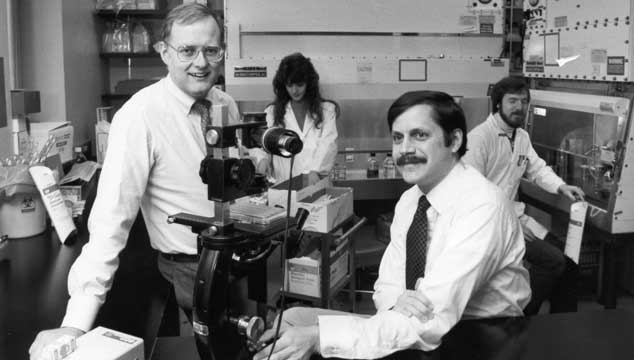
Fred Hutch marked its 50th Anniversary in 2025, giving the organization an opportunity to reflect on the impact we’ve made and to look ahead to our future. From groundbreaking science to compassionate care, Fred Hutch has spent five decades improving lives and pushing the boundaries of what’s possible.
Throughout the year, we’ve been highlighting the people, moments, and generosity that have defined the organization. This report highlights some of the specific accomplishments of the past year and illustrates our ongoing commitment to our patients, our people and our community.
As we look ahead, we carry forward a legacy of trailblazing achievements that changed the world, from pioneering bone marrow transplants to groundbreaking HIV and AIDS research to discoveries that redefined fundamental science. These milestones are more than history; they’re triumphs worth celebrating.
Read Our 2025 Report
Scientists see foam as starting point of a path to bedside gene therapy
November 17, 2025 • By Sabrina Richards / Fred Hutch News Service
Bioengineer Dr. Matthias Stephan developed a quick-foaming solution that he hopes could one day turn gene therapy into an outpatient procedure
Video by Robert Hood / Fred Hutch News Service
Fred Hutch’s Dr. Matthias Stephan is developing a special foam to try to make gene therapy for blood stem cell defects an easy, bedside procedure. “We can use our foam to genetically modify bone marrow stem cells at a very high efficiency,” he said.
The special properties of methylcellulose foam could make it a vehicle for bedside genetic engineering, according to a proof-of-principle study from bioengineers at Fred Hutch Cancer Center.
Read More
In the paper, recently published in Molecular Therapy Methods & Clinical Development, the team used a preclinical bone marrow model to show that the foam, combined with an already-approved method to extract and concentrate bone marrow stem cells, can efficiently deliver targeted gene therapy vectors prior to reinjection of the cells into the bone marrow.
“We show that we can use our foam to genetically modify bone marrow stem cells at a very high efficiency,” said Fred Hutch bioengineer and senior author Matthias Stephan, PhD.
In his study, the foam delivered higher amounts of the gene therapy vector than either a viral or lipid nanoparticle delivery system. Stephan envisions that combining this efficiency with a bedside method of concentrating bone marrow stem cells would enable development of outpatient gene therapies aimed at correcting genetic defects in bone marrow stem cells.
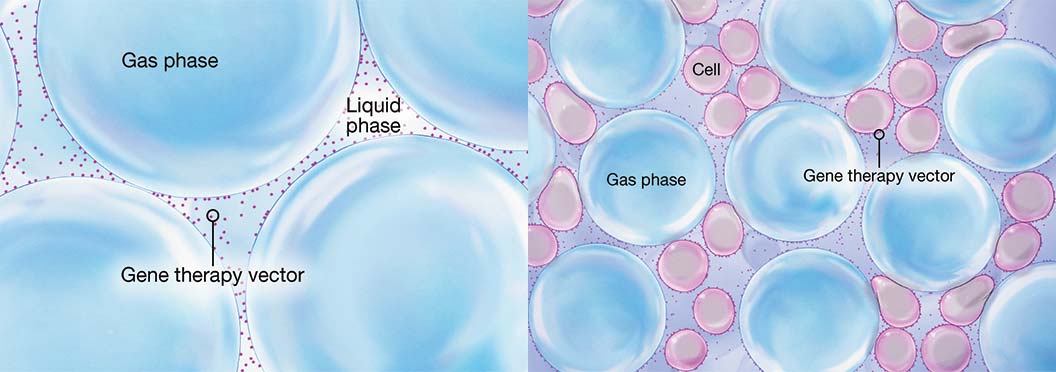
The bubbles in Stephan’s foam concentrate the gene therapy vector (pink dots, left), allowing cells to get more exposure to the vector at lower vector doses (right).
Adapted from Cummings, C.L. et al, Mol. Therapy: Methods & Clin. Dev., 2025
Removing hurdles between gene therapy and patients
Stephan works to make therapeutic genetic engineering more accessible to patients, by streamlining the process and bringing down costs. He has developed strategies to engineer cancer-fighting immune cells within the body or deliver them in more effective, concentrated and smaller doses. His mRNA and nanoparticle-based platform for reprogramming immune cells was exclusively licensed to Tidal Therapeutics, Inc., which was purchased by Sanofi in 2021.
Stephan’s latest strategy focuses on improving therapies designed to correct genetic defects in bone marrow stem cells.
Our bone marrow incubates the stem cells that give rise to our oxygen-carrying red blood cells, our infection-fighting immune cells and our clot-forming platelets. A wide range of diseases can arise from genetic defects in the precursors to any of these cells.
These diseases include thalassemias (blood disorders that cause reduced hemoglobin), sickle cell disease (blood disorders in which abnormal hemoglobin warps the shape of red blood cells), hemophilia (which causes impaired clotting), and Wiskott-Aldrich syndrome, which causes immunodeficiency and low platelets.
“In theory, if you could genetically modify stem cells, you could treat all these diseases, because the stem cell differentiates into all these cell types,” Stephan said.
In 2023, the U.S. Food and Drug Administration approved the first two gene therapies that could cure sickle cell disease by fixing the underlying mutations. These therapies could cure patients of sickle cell disease, which causes attacks of debilitating pain, anemia, and strokes.
But the procedures cost upwards of $2.2 million, take about a year of one’s life to undergo, and can only be given at authorized centers, of which there are fewer than 50 worldwide. The preconditioning regimen to wipe out the defective bone marrow stem cells, ensuing immunosuppression, and recovery are also very physically taxing.
“There is a critical need for having more simplified, accessible, and affordable gene therapy options for patients with genetic diseases like sickle cell disease or thalassemia, which affect millions of patients,” said Fred Hutch gene therapy expert Hans-Peter Kiem, MD, PhD. Kiem, who holds the Stephanus Family Endowed Chair for Cell and Gene Therapy, is collaborating with Stephan to move the foam toward the clinic. “Anything we learn from these studies for sickle cell disease will also benefit millions of patients with other genetic diseases affecting bone cells.”
These hurdles are too high for most patients to clear, Stephan said.
“There’s no option for a patient to really quickly access this in a minimally life-disruptive way, like a colonoscopy: go in and go out,” Stephan said.
That’s his dream: gene therapy as an outpatient procedure that takes an afternoon and is cheap enough for anyone to get.
His other projects also focused on innovative ways to deliver the technologies that can rewrite certain cells’ DNA to improve health. Last year, Stephan had a new brainwave: foam. He and his team developed a methylcellulose-based foam that could be mixed with a gene therapy vector.
The foam is a special mixture of bubbles surrounded by thin, continuous layers of liquid called lamellae. The bubbles’ structure allows a small volume of liquid to spread over a larger space and keeps it from seeping away, and the thin liquid layers concentrate the vector. Together, these characteristics maximize contact between the vectors and target cells, improving the efficacy while reducing the dose.
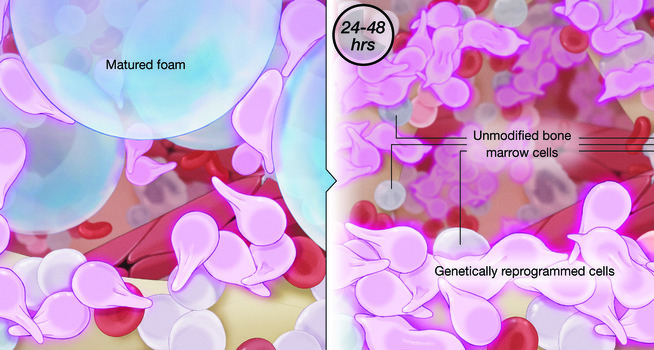
Stephan envisions that the foam will maximize bone marrow stem cell contact with the gene therapy vector while minimizing contact between the vector and non-target cells within the bone marrow.
Adapted from Cummings, C.L. et al, Mol. Therapy: Methods & Clin. Dev., 2025
Bedside gene therapy?
Currently, a patient receiving gene therapy to correct sickle cell disease can expect to devote about a year to their treatment. After their bone marrow stem cells are harvested, the process, during which they are cultured and genetically engineered, takes about six months.
From the blood stem cell’s perspective, it’s an inefficient process, Stephan said.
“Most of [the stem cells] don’t make it. … By the time you culture them [for months], they lose their homing property and they also lose their ‘stemness,’” he said.
This means that few cells remain that can give rise to all three types of blood cells — if they make it back to the bone marrow at all.
Stephan hopes to use his foam to skip these steps and maximize the number of healthy, genetically modified stem cells that can seed new blood cells.
Like several of Stephan’s other strategies, his bedside gene therapy approach mixes already available ingredients and techniques in an innovative way. The new approach capitalizes on an easy-to-perform method to extract, concentrate, and reinject bone marrow stem cells (called bone marrow aspirate concentrate, or BMAC) that’s already widely used in sports medicine.
Patients undergo temporary sedation while their stem cells are harvested and concentrated before being reinjected with BMAC to help regenerate damaged tissue and joints. It only takes a few hours.
Stephan and his team showed they could add one quick step to this process, mixing the BMAC with his gene therapy-infused foam. It takes less than a minute to hand-froth the foam in sterile syringes that can then be connected to a sterile, fully enclosed BMAC system. The concentrated bone marrow stem cells can then be mixed with the foam before being reinjected.
His team mimicked stem cell reinjection using a lab-based model of bone marrow to show that BMACs exposed to the foam mixture take up gene therapy vectors (either mRNA-based nanoparticles or a virus-based vector) more efficiently than BMAC that encounter the vector in a standard liquid format. Concentrating the key gene therapy targets — the bone marrow stem cells — prior to mixing with the foam also limits exposure of non-stem cells to the foam.
“The first novelty of the paper is that it’s an outpatient procedure: There’s no preconditioning, no apheresis,” Stephan said. “The idea is to inject genetically modified stem cells back into the bone marrow, so there’s no infusion.”
And unlike the standard genetic engineering approach, which requires stem cells to be cultured over weeks or months, this strategy would keep manipulation of the stem cells to a minimum, Stephan said.
“The process would be minutes and the stem cells don’t need any special cytokines to keep them alive, because they never leave their physiological environment,” he said.
To boot, the strategy would steeply reduce the amount of gene therapy vector needed to engineer a therapeutically relevant number of stem cells. It’s a matter of double concentration: the BMAC procedure highly concentrates the stem cells, making it easier for the foam-concentrated vector to reach them.
“So the advantage is really that you don’t need as much gene transfer vector. And you don’t systematically expose the patient to the vector, to potential off-target editing,” Stephan said.
If successful, the strategy wouldn’t need expensive equipment, time, or hospital real estate like the clean rooms in which cells currently undergo genetic engineering. This would make it easy to adopt in any community hospital, Stephan said.
Next steps
Stephan is working to bring his approach closer to the clinic by testing in more-relevant animal models and by using vectors that can target specific cell types.
“Specificity is always important to minimize any off-target effects, and the ability to incorporate more specific targeting of the relevant cells populations with Matthias’s foam-based therapy will be an important next step,” Kiem said.
Stephan cautioned that even if successful, the approach would not be appropriate for every genetic engineering application. In this case, altering the DNA of the stem cells means that all their progeny will have the same DNA alterations, so the risk and benefit must be worth it, he said.
Applications in which cells only temporarily produce a protein or where there’s no need to alter the DNA of a whole cell lineage, such as with certain cancer cellular immunotherapies, should not get this treatment.
“This would be a situation where you’re aiming for a cure,” Stephan said.
The work was supported by the National Institute of Diabetes and Digestive and Kidney Diseases, the Fred Hutch Immunotherapy Initiative and the Bezos Family.
Powerful purpose: Fred Hutch Obliteride raises $9.2M for cancer research
November 13, 2025 • By Laura Anderson / For Fred Hutch News Service
Annual bike ride and 5K walk/run joins community of thousands to advance groundbreaking discovery at Fred Hutch
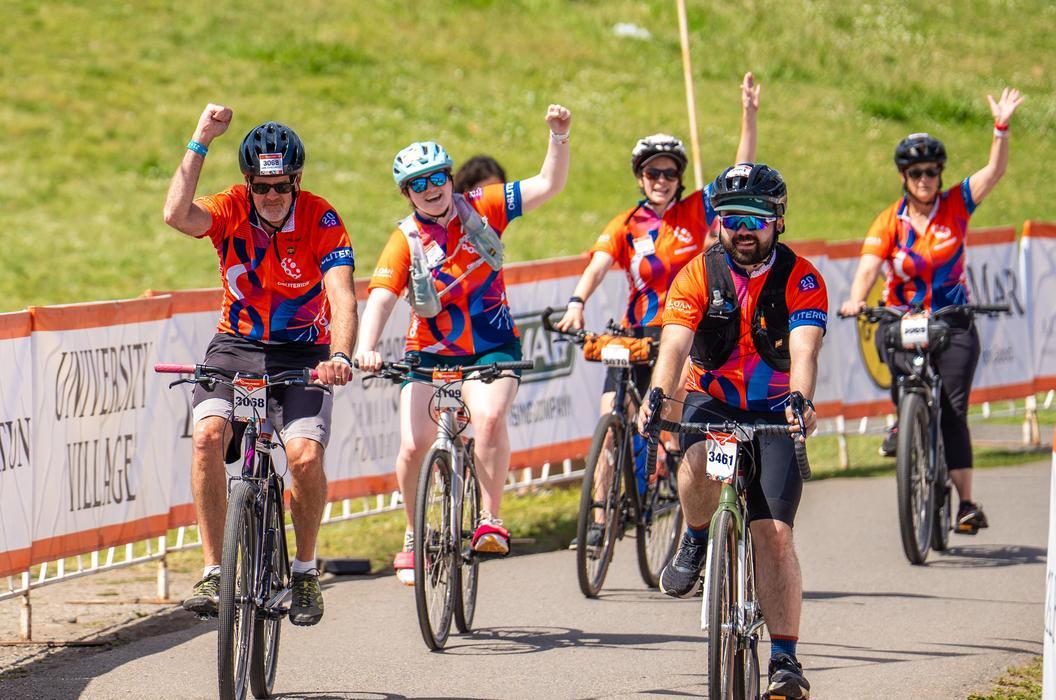
Participants cross the finish line during Fred Hutch Obliteride in Seattle on Aug. 9, 2025. The community, supported by generous event sponsors, has raised millions for groundbreaking cancer research at Fred Hutch.
Photo by Connor O’Shaughnessy / Fred Hutch News Service
What makes Obliteride, Fred Hutch Cancer Center’s annual bike ride, 5K walk/run and fundraiser, so amazing? For the thousands of participants who joined this season, it begins with a personal commitment to scientific discovery and a collective goal to cure cancer faster.
Add in plenty of cheers, connection and heart on Obliteride Weekend, August 8 and 9 in Seattle, and the result is powerful: Fred Hutch announced that in 2025, the Obliteride community raised $9.2 million for groundbreaking research. This amount brings Obliteride’s cumulative fundraising total to more than $67 million. Every dollar participants raise supports advances in cancer prevention, detection, treatment, and cures at Fred Hutch, thanks to event sponsors and supporters.
Read More
“Amazing ride, outstanding cause,” said 50-mile bike rider Frank Aronson as he celebrated after his ride. Aronson, his daughter, and her team, Simmy, joined more than 5,000 participants pedaling 25, 50 or 100 miles, walking or running a 5K, or participating virtually while fundraising for Fred Hutch. Participants were supported by more than 900 volunteers.
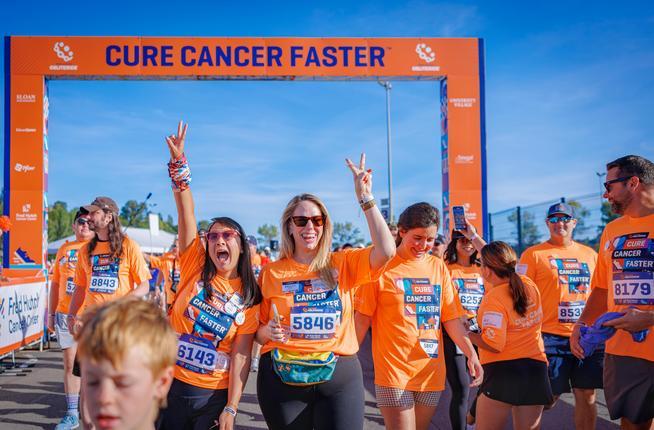
Obliteride 5K walkers Ines Feiereisel, left, and Ashley Best, right, both part of Team Nordstrom, show their Obliteride excitement at the starting line on Saturday, Aug. 9, 2025. This year, the event welcomed more than 3,000 walkers and runners of all ages.
Photo by Robert Hood / Fred Hutch News Service
Obliteriders fuel scientific discovery
Obliteride’s momentum reflects the dedication of participants, the passion of their donors, and the commitment of event sponsors, said Obliteride Senior Executive Director Tracy Evans.
“Participants, including our more than 900 incredible volunteers, shared our mission with the world and inspired more than 24,000 donors to take action for trailblazing science,” said Evans. “Obliteride fundraising puts our collective passion to work to improve lives. From helping Fred Hutch advance immunotherapies for more cancers to fueling basic science discoveries that transform our understanding of health and disease, their support is critical.”
Thomas J. Lynch Jr., MD, Fred Hutch president and director and holder of the Raisbeck Endowed Chair, underscored the importance of Obliteride fundraising.
“Obliteride fundraising matters,” said Lynch. “Government funding for science is uncertain, and the dollars this community raises are more important than ever. Together, we are accelerating scientific discoveries, translating breakthroughs into treatments and advancing care for the more than 63,000 patients treated at Fred Hutch every year — and for people everywhere.”
A personal and powerful impact on scientific research
Participants can raise money for the areas of focus at Fred Hutch that are the most meaningful to them. This year, their fundraising and the generosity of their donors will support 28 disease areas, 28 programs and specialties; 92 individual faculty and clinicians; and ongoing innovation through the general fund for cancer research greatest need.
“Obliteride funding is important to the scientists it supports and also to families directly impacted by cancer,” said Obliteride team captain April Suarez, MLS (ASCP), who is a cytogenetics technologist at Fred Hutch. Together with her Go Gene Team, Suarez fundraised for the laboratory of her co-captain Min Fang, MD, PhD, who studies changes in DNA that could lead to cancer.
Suarez said that the many clinical trials available to patients at Fred Hutch — and the advances they can unlock — start with the kind of early-stage research Obliteride funds.
“It’s a special thing for patients to have access to trials. And that doesn’t happen if research isn’t funded in the first place,” she said.
Suarez and her team were among the more than 1,000 Fred Hutch and UW Medicine scientists, clinicians and staff who joined the Obliteride community to help cure cancer faster.
“You can tell whole families were there in support of a loved one, whether that loved one was with them or not,” Suarez said. “It was good to feel like part of the community and that everyone is uniting for a common goal.”
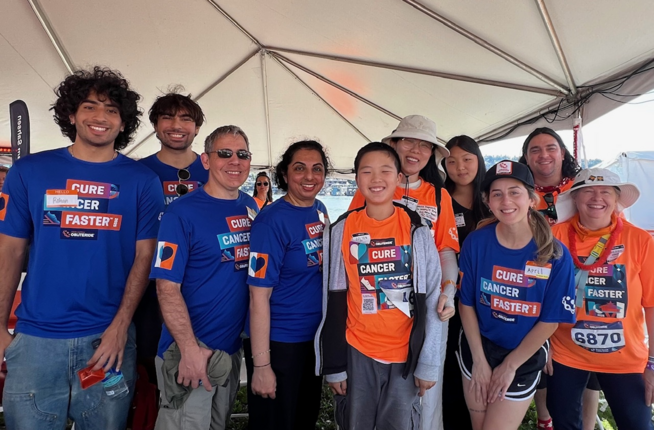
Fred Hutch cytogenetics technologist April Suarez, MLS (ASCP), front, second from right, with members of her Go Gene Team at Obliteride 2025.
Photo courtesy of April Suarez
‘This one’s for me.’
For 50-mile rider Eric Anderson, Obliteride has a personal meaning.
“I’ve long been interested in trying to help in whatever way I could with cancer,” said Anderson, who has participated in other fundraising events to support family and friends. In 2024, Anderson was diagnosed with and treated for colon cancer. “Fred Hutch played such a huge role in getting me back to a good place,” he said.
During a clinic visit, Anderson saw a sign for Obliteride and decided to sign up. “I thought, ‘This one’s for me,’” he said.
In August, he and his partner, Val, completed their second ride.
“Last year, I was just a few months into recovery and wasn’t sure I could finish the 25-mile ride,” said Anderson. “That finish felt like a relief. One year later, I’m more fully recovered, so we decided to push ourselves and go for the 50-mile ride. We didn’t worry about whether we could finish because we knew we could. Crossing the finish line this year felt like an achievement.”
“Before each Obliteride, we talk about why we’re doing it,” Anderson said. “For us, it isn’t about competing or going fast. It’s about riding together to represent how we faced my cancer together. We start together and we finish together. That’s what matters most to us.”
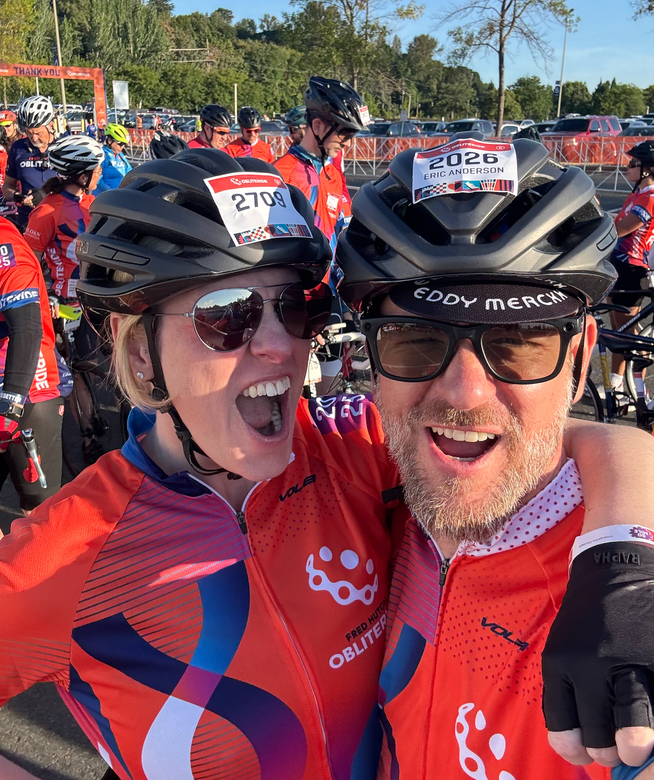
Two-year Obliterider Eric Anderson, right, with his partner Val during their 50-mile Obliteride on August 9, 2025. Eric was treated for colon cancer at Fred Hutch in 2024.
Photo courtesy of Eric Anderson
Every dollar fuels Fred Hutch’s mission
Obliteride event sponsors and supporters ensure that every dollar participants raise directly fuels groundbreaking discovery at Fred Hutch. Many also inspire their employees and communities by establishing teams of participants and volunteers.
“I started helping through my company, GLY Construction,” said volunteer Cassie Withrow. “We have been a sponsor for several years, and it’s an amazing way to give back to the community we live and work in.”
Craighton Goeppele, executive vice president and general counsel of sponsor TerraPower and a captain of Team TerraPower, shared the same sense of community and mission.
“Obliteride was a fun opportunity for TerraPower’s employees and supporters to connect on a beautiful Pacific Northwest summer day and do something impactful to advance the great work happening at Fred Hutch,” Goeppele said.
Dozens of dedicated sponsors and supporters like these make Obliteride possible, said Evans. “It is amazing to see our thriving civic, business, and philanthropic communities come together to make this event shine.”
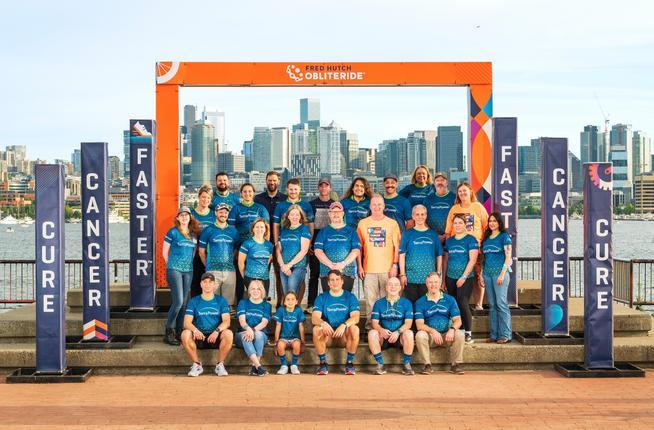
Members of the TerraPower Obliteride team gather for a group photo on Obliteride Weekend. TerraPower is one of the many event sponsors and supporters who ensure that every dollar participants raise fuels discovery at Fred Hutch.
Photo by Nate Burgher Photography
Momentum and transformative goals
Obliteride’s success is part of an exciting year at Fred Hutch. The organization is celebrating both its 50th anniversary and the Campaign for Fred Hutch, which is bringing the Fred Hutch community together to transform the pace and scale of innovation to redefine cancer and infectious disease for generations to come.
“Every gift makes a difference for world-leading research,” said Kathy Surace-Smith, Obliterider and chair of the committee for the Campaign for Fred Hutch. “Fred Hutch’s pursuit of cures is driven by the same passion that brings so many supporters to this cause.”
That shared momentum and impact is what makes Obliteride strong, said Evans.
“Obliteriders turn their love into action by fundraising for world-changing research. Now, we have so much more to do. I can’t wait to see all that this extraordinary event and community will achieve next.”
Save the date for next year’s Fred Hutch Obliteride
Saturday, August 8, 2026
All are invited to bike ride, walk, run or volunteer and help cure cancer faster.
Value in Cancer Care Summit reimagines cancer care
November 19, 2025 • By Diane Mapes / Fred Hutch News Service
Annual conference zeroes in on practical solutions for patient and provider pain points like burnout, symptom management and financial toxicity
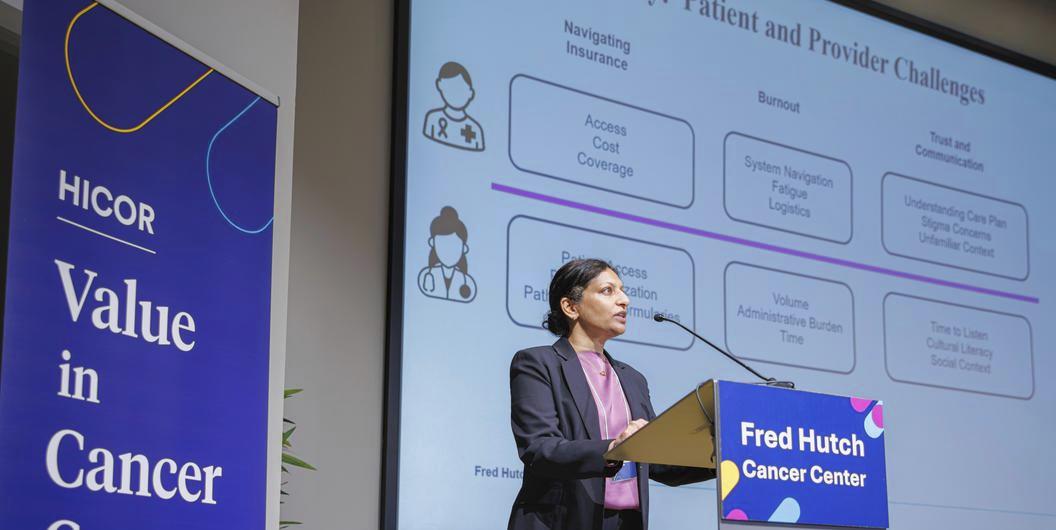
Fred Hutch’s Dr. Veena Shankaran welcomes attendees to the Value in Cancer Care Summit held November 6 at Bell Harbor International Conference Center. This year’s meeting focused on provider and patient challenges like burnout, the growing data tsunami, insurance navigation and other barriers to whole person care.
Photo by Robert Hood / Fred Hutch News Service
“Our ultimate vision is whole person care,” said Fred Hutch Cancer Center’s Veena Shankaran, MD, MS, in her opening remarks at the Value in Cancer Care (VCC) Summit, held Thursday, November 6, at Seattle’s Bell Harbor International Conference Center. “But there are barriers.”
Patients struggle with navigating insurance benefits, financial stress, burnout and treatment side effects, she said, while providers have to deal with administrative overload, prior authorization, charting and EHR (electronic health record) frustrations.
Unfortunately, these and other challenges are “set against the backdrop of … a data tsunami in health care, especially oncology,” Shankaran said, pointing to precision medicine and genomics, adoption of AI in clinical care and the ever-increasing amount of information patients and providers need to consume and understand.
Read More
The VCC conference, put on by the Hutchinson Institute for Cancer Outcomes Research, or HICOR, focused on many of these challenges with speakers and attendees digging into burnout; information overload; pain management and substance use; the escalating costs of care, as well as mistrust, misinformation and missed care opportunities, particularly in the realm of palliative medicine.
But the annual “meeting with a mission” also offered practical solutions, valuable insights, a raft of resources and proven methods to help overcome, or at least ameliorate, many of them.
As always, Scott Ramsey, MD, PhD and Shankaran, co-directors of HICOR, opened the conference with a shout-out to the cancer patients, caregivers and advocates in attendance.
“We hope you’ll engage with us by asking questions, sharing stories and meeting someone new,” Ramsey said. “Take advantage of this group which has people who touch cancer care from all different perspectives and ask them why they’re here. Most of all, let’s celebrate this community. We all are here because of cancer patients. Let’s celebrate them and celebrate what we do to try and make their lives better.”
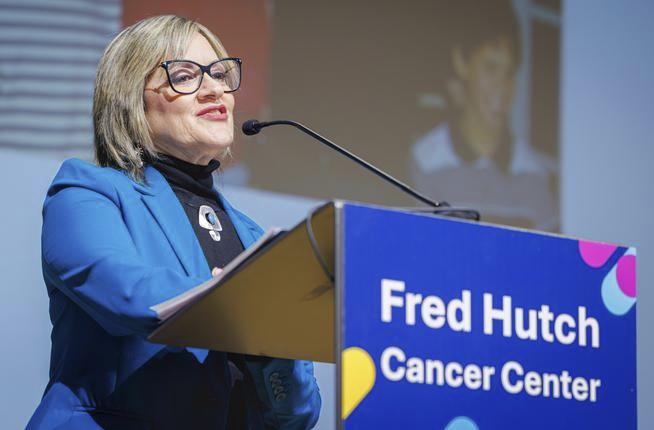
Keynote speaker Dr. Barbara Segarra-Vazquez brought the patient advocate perspective to the Value in Cancer Care Summit. “One of the first things a patient should know is what their insurance will cover and what they have to pay out of pocket,” she said.
Photo by Robert Hood / Fred Hutch News Service
More data on the way
HICOR presented a few new data points, including results from a survey of patients regarding the new practice of releasing radiology test results to patient portals as soon as they’re ready.
“Patients can feel anxious receiving test results without context, which can result in more confusion and messages to the clinical team,” Shankaran said about the guidance, put in place by the 21st Century Cures Act Final Rule.
At the same time, she said, a survey of providers showed advanced imaging use in oncology has increased over time.
“We’re seeing an escalation in the use of PET, CT and MRI imaging in Washington state,” Shankaran said. “Imaging use has grown significantly, around 30% from 2011 to 2023.”
More data will be featured in the next HICOR Community Cancer Care Report, available in June 2026 (read the 2025 CCC Report).
HICOR’s annual CCC Report uses “quality metrics” — such as emergency department (ED) visits during chemotherapy, appropriate end-of-life care, use of germline or hereditary testing and adherence to treatment recommendations — to assess how cancer centers large and small are doing with regard to providing value-based care.
Shankaran also introduced the day’s theme — “Stronger Together: Reimagining Systems to Empower Patients and Clinicians” — and announced HICOR’s new Expanding Clinical Trials initiative to bring cancer care delivery research studies to community oncology programs in Washington state.
The initiative, she said, will include studies designed to relieve fatigue in cancer patients undergoing radiation; expand the use of germline testing to enhance treatment decisions and proactively help patients dealing with the financial toxicity of cancer care. The trials program will also include interventions to improve understanding and communication about scan reports, she said.
Six studies are active or in startup at clinics now including PeaceHealth (Vancouver, Washington, and Ketchikan, Alaska), MultiCare (Spokane and Puget Sound), Skagit Regional Health (Mount Vernon), Providence Regional Medical Center (Everett) and Virginia Mason Franciscan Health (Burien).
‘Your information is now being exploited and monetized by a bunch of billionaires who want to use your attention to make more money. Making that dynamic clear helps people realize the risk. Influencers personally profit on misinformation.’
— Fred Hutch / University of Washington oncologist and palliative care expert Dr. Anthony ‘Tony’ Back
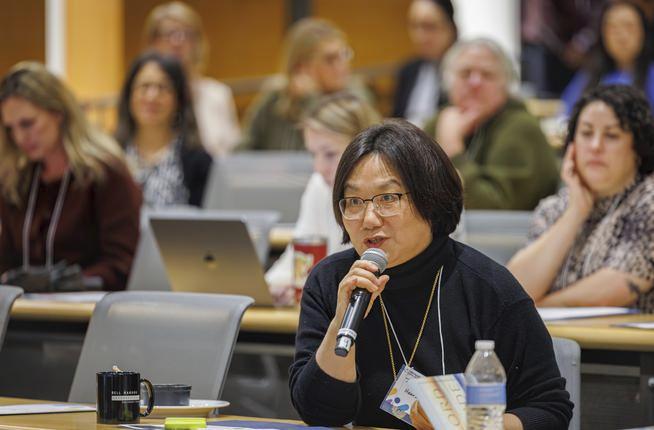
Cancer patient advocate and founder of the accessible language nonprofit www.hear2care.org Ting Ting Zhang asks a question during Fred Hutch’s Value in Cancer Care Summit, held November 6.
Photo by Robert Hood / Fred Hutch News Service
Challenges big and small
Keynote speaker Barbara Segarra-Vazquez, DHSc, professor of the School of Health Professions at the University of Puerto Rico, has been a cancer patient advocate since her early-stage breast cancer diagnosis in 2003.
“I try to advocate for those who cannot advocate for themselves,” she said, going on to discuss some of the common patient challenges — from food, housing and transportation insecurity to a lack of care coordination and financial help — that could be alleviated by the use of patient navigators.
“Patients are taking half their medications and sacrificing basic needs to get treatment,” she said. “The challenges come at many levels.”
Seeking financial navigation help early on in the treatment process as well as actively participating in all treatment decisions are crucial for patients and caregivers, Segarra-Vazquez said. But before making any decisions, patients need to first understand their cancer and what their insurance — if they have it — will cover.
“When you’re diagnosed, it’s all about the stage, the prognosis, the treatment options and what are you going to choose and by the way, you have to choose by tomorrow,” she said.
But patients can’t truly participate in shared decision-making if they don’t understand what type of cancer they have — or what kind of treatment their insurance will cover.
“One of the first things a patient should know is what their insurance will cover and what they have to pay out of pocket,” she said.
She also pushed clinicians, administrators and researchers to think outside the box when it comes to finding sources of support for patients.
“Let’s be creative,” she said. “Sometimes you might not be able to give a patient money, but you can make her life easier by coordinating all the treatment appointments so they’re close together.”
Other ideas for health care providers and centers:
- Partner with businesses and vendors (like gas stations) to provide vouchers for patients.
- Partner with local schools and universities to raise funds (or food vouchers) for patients.
- Research area support groups and nonprofits to see what help they offer — or provide them with the list of needs you have identified in your patient population.
- Provide venues and spaces for cancer support groups.
- Include family and caregivers in the conversations around solutions.
“It’s important to never assume what people want,” she said. “Let’s find out what they want.”
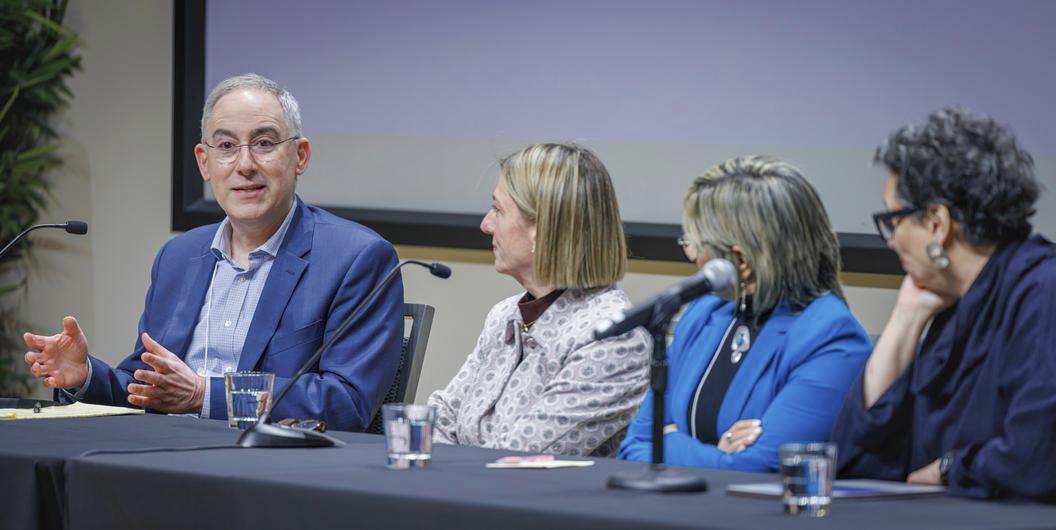
Fred Hutch head-and-neck cancer oncologist and researcher Dr. Keith Eaton discusses innovations in patient care and coordination with (left to right) oncologist and medical director of hematology-oncology at Northwest Medical Specialties Dr. Sibel Blau, patient advocate and keynote speaker Dr. Barbara Segarra-Vazquez and Gwen Darien of the Patient Advocate Foundation during the Value in Cancer Care Summit.
Photo by Robert Hood / Fred Hutch News Service
Battling burnout
Clinical health psychologist Fay Hlubocky, PhD, from the University of Chicago, talked about patient and provider burnout, which she called “a combination of exhaustion, detachment and cynicism that develops with unrelieved stress over a long period of time.”
Research, she said, shows burnout is growing among oncologists and it’s getting worse as organizations become more corporatized and new practices are introduced such as telehealth with its resulting “Zoom fatigue.”
“Pre-pandemic, about 45% of the U.S. membership of ASCO [American Society of Clinical Oncology] reported emotional exhaustion and/or depersonalization,” she said. “In 2023, the burnout was significantly higher, 59%. Although, 63% still reported finding joy in their work — they love working with patients.”
Providers, she said, point to work overload, exhaustion, depersonalization, feeling ineffective and an abundance of occupational stress as driving their burnout. For patients and caregivers, burnout is more about living with the diagnosis, grief and loss, dealing with treatment and side effects and all the daily stressors.
“But the core feature of burnout for both patients and clinicians is emotional and physical exhaustion,” she said.
How can cancer patients manage and cope with burnout?
Hlubocky pointed to advocacy, which gives many patients a feeling of empowerment and inspiration; psychosocial help; pacing yourself so you have energy for what matters and asking your cancer care team for help and resources.
“It’s OK to not feel OK,” she said. “It’s also good to forgive yourself when things don’t go as planned.”
What can clinicians and other care providers do to battle burnout?
“We can all cultivate resilience,” she said. “It’s a positive response to adversity. We can adapt to these changes and focus on strengths like vitality, engagement and self-advocacy. We can promote a sense of control and commitment within ourselves. And we can set boundaries.”
Mindfulness — taking a moment to be fully present and in touch with your mind and body — is also helpful.
“You need to know when to go home and when to say no,” she said, suggesting doctors and other health care providers take a mindful moment whenever they’re washing their hands during the day.
“Recognition of burnout is imperative for well-being,” she said.
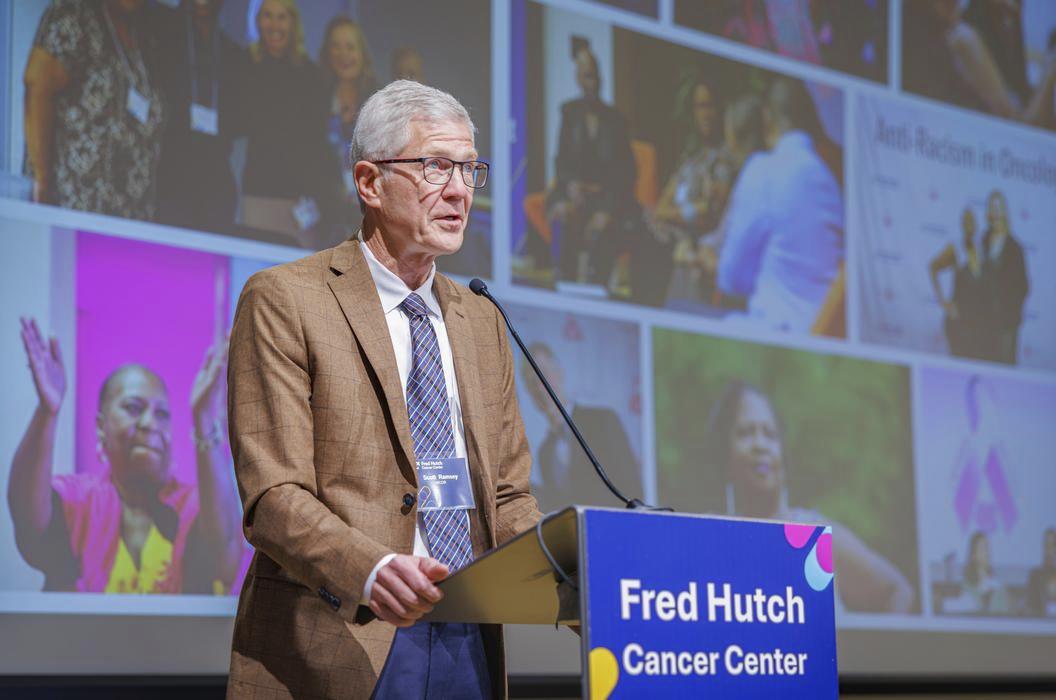 Fred Hutch’s Dr. Scott Ramsey dedicated the summit to patient advocate and Cierra Sisters founder Bridgette Hempstead, who died of metastatic breast cancer last December. “Bridgette was an inexhaustible reservoir of energy. She was passionate about raising awareness about the problems that Black patients with cancer are facing. She inspired me, she challenged me, but she always uplifted me. As she did with everyone she met.”
Photo by Robert Hood / Fred Hutch News Service
‘Out-relating’ misinformation and mistrust
Featured speakers and audience members discussed a host of topics throughout the rest of the day, including the possibility of delivering palliative care to cancer patients via telehealth, especially earlier on in the treatment process when it’s often not provided.
Jennifer Temel, MD, of Massachusetts General Hospital talked about the challenges of communicating the aims of palliative care — which is supportive care to manage symptoms — a service that’s still regularly misunderstood.
“People shut down when they hear that word — they think you’re giving up on them,” said one nurse in the audience.
University of Washington’s Anthony “Tony” Back, MD, spoke on the shifting landscape of trust in medicine and science (spoiler alert: it’s gone steadily downhill) and the challenges of dealing with a tsunami of misinformation, attacks on science and a scourge of social media influencers peddling bad advice.
“We can’t out-compete misinformation,” he told attendees. “We have to out-relate it. You as a person can make the difference,” reminding attendees that rumors about the medical industrial complex hiding cancer cures in order to milk patients for money is ages old, “and it’s getting worse because now new influencers are promoting it.”
He said a good way to counteract this is by promoting a healthy information diet and a healthy information ecosystem to patients with cancer.
“Your information is now being exploited and monetized by a bunch of billionaires who want to use your attention to make more money,” he said. “Making that dynamic clear helps people realize the risk. Influencers personally profit on misinformation.”
The day’s events also included a moment of recognition and acknowledgement for Bridgette Hempstead, founder of the cancer support group Cierra Sisters and longtime HICOR collaborator.
“Bridgette was an inexhaustible reservoir of energy,” Ramsey said of his late friend and research partner. “She was passionate about raising awareness about the problems Black patients with cancer are facing. She inspired me, she challenged me, but she always uplifted me. As she did with everyone she met. This year’s summit is dedicated to her memory, her legacy and her can-do spirit.”
Slides from the presentations at the Value in Cancer Care Summit will be available on the HICOR website.
Join the Thomas Legacy Society
Thomas Legacy Society members are visionary supporters like you who have chosen to include Fred Hutch Cancer Center in their estate plans. Their generosity ensures that Fred Hutch will continue to redefine cancer and infectious disease and improve lives for generations to come. Legacy giving empowers Fred Hutch to:
- Uncover the fundamental building blocks of life to understand health and disease.
- Develop new immunotherapies for more types of cancer.
- Harness data and technology for prevention, detection, treatment, and cures.
- Personalize cancer care for every individual.
- Train future scientists to continue world-changing research.
Visit our website to learn more or contact us.
Have you already included Fred Hutch in your estate plans? Please let us know so we can ensure your wishes are carried out as you intend!

For more than 50 years, Fred Hutch has been looking beyond what’s possible today to a new era of discovery. With your partnership, our Campaign for Fred Hutch is transforming the pace and scale of innovation so we can redefine cancer and infectious disease for generations to come.