
Fred Hutch Legacy Insiders
Winter 2027
Loyal supporters and their advisors are partnering with Fred Hutch Cancer Center to accelerate world-changing advances in the prevention, detection, and treatment of cancer and infectious disease. We invite you to learn more about the innovation their collective support makes possible.
Watch this brief video to hear how our teams are advancing precision screening to intercept cancers before they develop.
Our 2026 Annual Report
Celebrating a remarkable year of breakthroughs and discoveries at Fred Hutch Cancer Center.
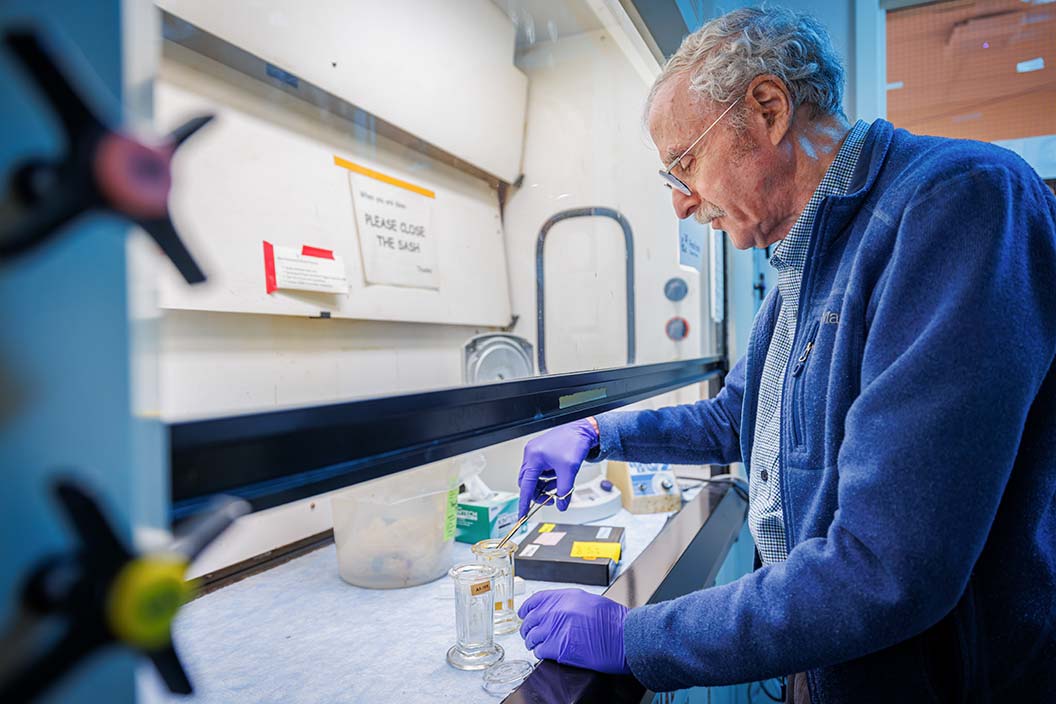
***PHOTO CAPTION HERE***
Read More
***Annual Report Copy Here***
It ends with her
An inherited gene mutation upended Amanda Swenson’s life. She gives to ensure her daughter has a healthier future
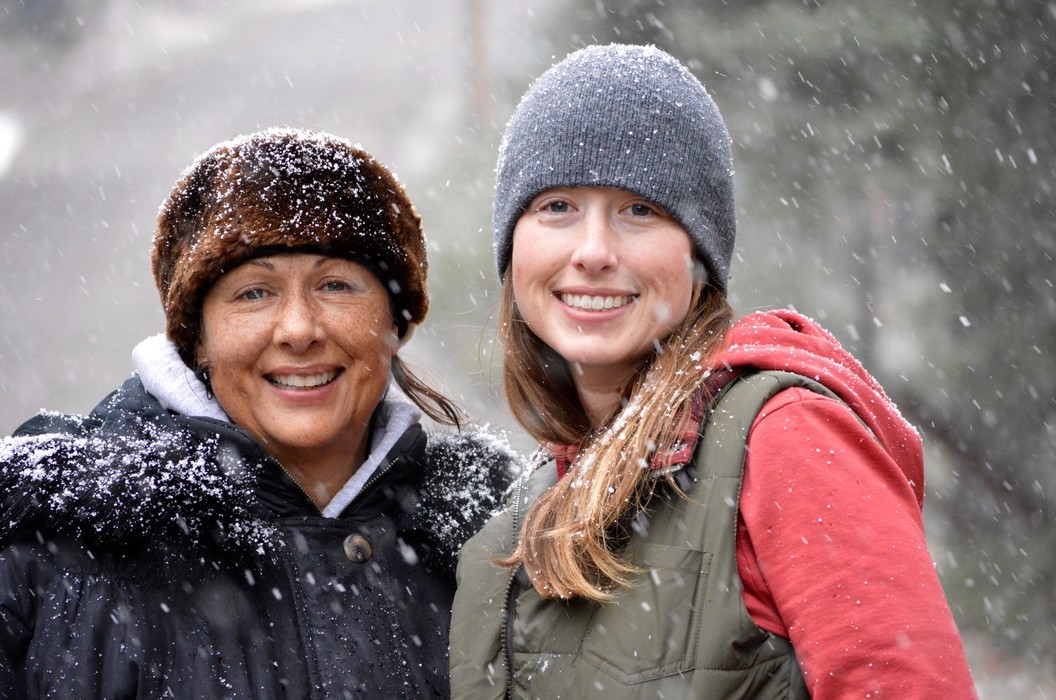
Amanda Swenson (right) shares her mother’s love for family and crafting.
Courtesy of Amanda Swenson
When Amanda Swenson met Fred Hutch Cancer Center researcher Richard Adeyemi, DVM, PhD, in spring 2025, she got goosebumps. Multiple times.
Adeyemi is an assistant professor in Fred Hutch’s Basic Sciences Division, and Swenson clocked his genius immediately as they talked in his lab. Then there was his quiet confidence, which revealed itself a little more slowly. More than anything else, though, she was struck by Adeyemi’s exciting ideas for fixing the very genetic trait that had upended her life — and decided right then and there that she wanted to support him and his work.
Read More
Adeyemi studies the BRCA2 gene. When it works as intended, BRCA2 plays a crucial role in correcting damage to our DNA. When it doesn’t, the individual’s risk of several cancers jumps significantly. Swenson inherited a BRCA2 mutation and was diagnosed with breast cancer in her late 30s.
Like others in the Basic Sciences Division, Adeyemi is working to answer fundamental questions about our cells and how they work so we can better understand what causes diseases like cancer. He and his colleagues have discovered that while a BRCA2 mutation can drive cancer, it also creates vulnerabilities in tumor cells. In his lab, as he explained his ideas for exploiting those weaknesses, Swenson thought, “Yes, this is exactly what we need to do. And Dr. Adeyemi is the guy for the job.”
Swenson learned about her BRCA2 status in her late 20s when her mom was diagnosed with pancreatic cancer, and they both underwent genetic testing. Equipped with that invaluable knowledge, Swenson started getting mammograms right away, more than a decade before national guidelines recommend them for individuals at average risk.
She knew the odds: Her risk of breast cancer was nearly five times higher than that of someone without an inherited BRCA mutation. So it wasn’t exactly shocking when, at 37, one of Swenson’s semi-annual screenings at Fred Hutch detected a mass. But that didn’t make it any less traumatic — for Swenson or for her family. She was especially worried about her young daughter; what if she had inherited the mutation from Swenson, just as Swenson had from her mother?
Swenson’s cancer was detected early, and her treatment was successful. When she felt she was physically and emotionally past the experience, she was motivated to do something to change the future for her daughter.
“My mom died two years before I got my own cancer diagnosis,” Swenson said. “I truly wish I could have thanked her for the gift of early detection that she gave me. So instead, I’m going to pay it forward.”
‘A real opportunity to make an impact’
There was only one place Swenson even considered directing her newfound philanthropic intent. The staff and physicians at Fred Hutch’s Women’s Wellness Program had taken excellent care of her for years before her diagnosis, making sure she received the right screenings at the right time and connecting her with genetic counselors and registered dietitians. Then, when she needed treatment, they seamlessly transitioned her to the oncology team. So, not knowing exactly what to do next, she cold-called the Philanthropy Department, and a team member invited her to Fred Hutch’s South Lake Union campus for a lab tour.
Her desire to support Fred Hutch research was about more than simply giving back. She was determined to effect real, measurable change.
“I want my daughter’s experience to be drastically different than mine, and that can only come through big swings,” Swenson said. “And it felt like at Fred Hutch, there was this real opportunity to make an impact.”
Meeting with Adeyemi in 2025 further drove that point home — particularly because of the compassion and sensitivity that he brings to his research. At various points in her life, Swenson has viewed her BRCA2 mutation as a deficiency and felt guilty about the possibility of passing it on to her daughter, “even though I had no choice in the matter and it’s just how I am,” she said. “But the way [Adeyemi] approaches [these genetic mutations] just feels so respectful to me as a human.”
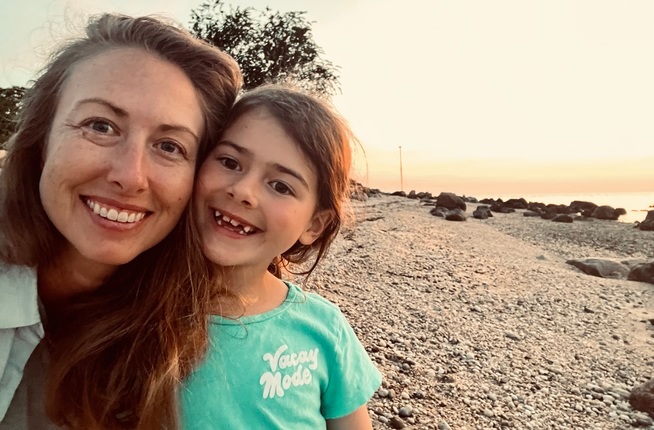
Amanda Swenson gives to create a healthier future for her daughter’s generation.
Photo courtesy of Amanda Swenson
‘This is the future I want for my daughter’
Swenson was so inspired by what she learned in Adeyemi’s lab that she made her first gift to fund his research two weeks later, via her Donor-Advised Fund (DAF). Then, one year later, she made another. But she still wanted to do more to support him, as well as others like herself: younger, philanthropically minded and uniquely motivated to act. This makes her an ideal addition to Innovators Network, Fred Hutch’s community of next-generation donors committed to ending cancer in their lifetime.
“This was an opportunity for me to step out into the light to say, ‘This can happen, but we can move forward and make it better,’” Swenson said. “If my story resonates with other people and would inspire them to give, it’s a no-brainer to share it.”
Last Friday, Swenson spoke with Adeyemi at IN for the Hutch, IN’s annual fundraiser, and rallied attendees to support the fundamental science that can drive new breakthroughs.
“Basic science researchers like Richard are making the discoveries that could make what I went through look like ancient history,” Swenson said from the stage. “This is the future I want for my daughter and her whole generation.”
In that future, Swenson can focus more on all the good things she inherited from her mother, like devotion to family and a love of crafting.
“My mom was so wonderful, and she was so excited to be a grandmother,” Swenson said. “The love that I know how to give my daughter is because she loved me so well.”
Obliteride 2026
***Announcement News Article Coming Soon***

***PHOTO CAPTION HERE***
Photo courtesy of …
Your content goes here. Edit or remove this text inline or in the module Content settings. You can also style every aspect of this content in the module Design settings and even apply custom CSS to this text in the module Advanced settings.
Read More
***Obliteride 2026 Article Here***
Key driver of aggressive prostate cancer identified, suggesting new way to reverse drug resistance
A Nature study reveals that a single transfer RNA (tRNA) helps determine whether prostate cancer remains treatment-sensitive or becomes resistant, opening new avenues in precision oncology
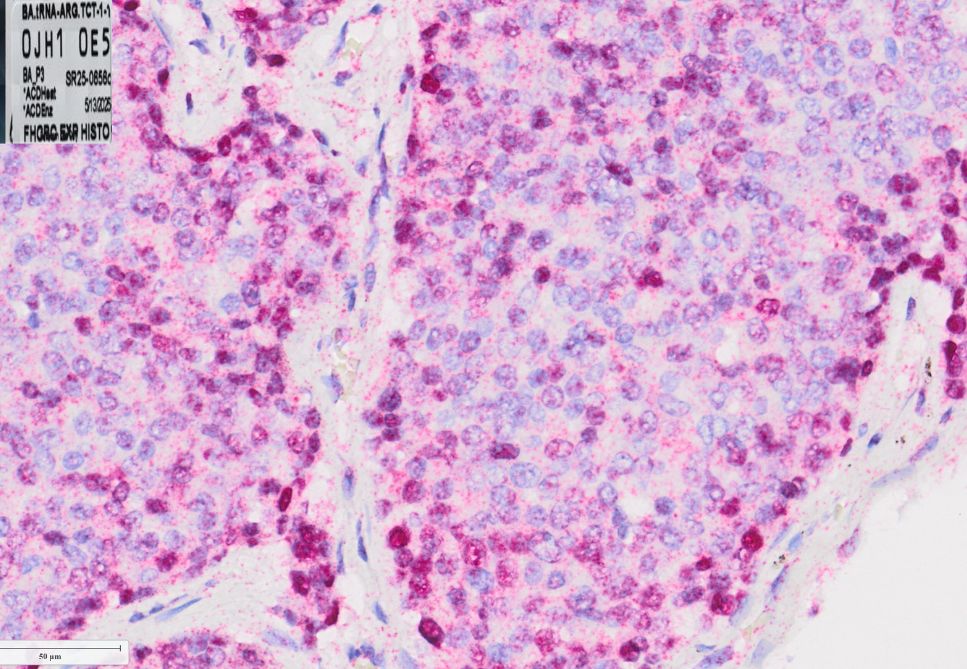
Low amounts of a specific tRNA in prostate tumors were associated with the tumor being less androgen receptor dependent and therefore less likely to respond to androgen receptor targeting therapies.
Credit: Dr. Yeon Soo Kim, Hsieh Lab, Fred Hutch Cancer Center
SEATTLE — Oct. 7, 2026 — Researchers at Fred Hutch Cancer Center have identified a previously overlooked molecular regulator that helps determine whether prostate tumors remain sensitive to treatment or evolve into a more aggressive, drug-resistant form of the disease.
Read More
The findings, published Oct. 7 in Nature, reveal for the first time that a single transfer RNA, or tRNA, can control the identity of prostate cancer cells and influence their response to therapy.
“The discovery opens an entirely new realm of cancer biology that was previously unrecognized,” said co-corresponding author Andrew Hsieh, MD, a professor and associate director of Fred Hutch’s Human Biology Division. “Historically, tRNAs have been thought to play a bystander role in cell maintenance and disease, but our study shows that tRNAs can actively shape the identity of cancer cells.”
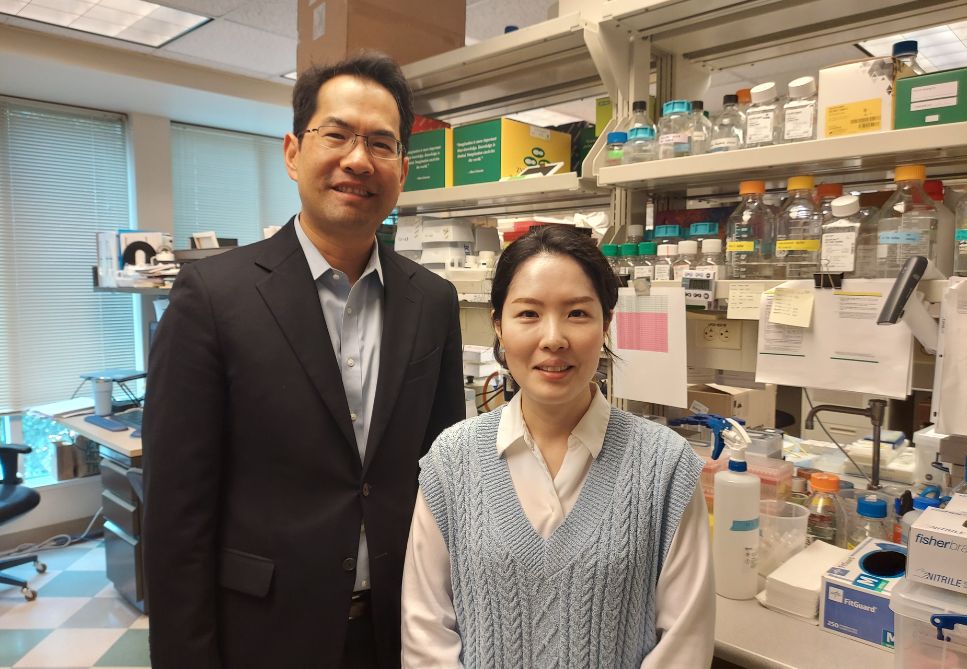
Andrew Hsieh, MD, a professor and associate director of Fred Hutch Cancer Center’s Human Biology Division, and Yeon Soo Kim, PhD, a Fred Hutch postdoctoral researcher, in Hsieh’s lab at Fred Hutch. Hsieh holds the Larry and Virginia Gordon Endowed Chair in Prostate and Bladder Cancer Research at Fred Hutch.
Prostate cancer, a leading cause of cancer in men, can shift cellular characteristics over time. Initially, prostate cancer depends on the activity of the androgen receptor, a protein that fuels tumor growth and is the primary target of standard therapies. But then many tumors shift to an androgen receptor-independent state. Once independent of the androgen receptor, prostate cancer tumors become more aggressive and less responsive to therapy.
First author of the Nature paper, Yeon Soo Kim, PhD, a Fred Hutch postdoctoral researcher in Hsieh’s lab, sought to understand the molecular players underlying how prostate cancer changes its identity and becomes resistant to treatment. Kim received a National Cancer Institute K99/R00 Pathway to Independence Award to support the studies.
“We already knew that genomic mutations or transcriptional factor-dependent genetic expression are altered during cancer progression and can lead to the development of treatment resistance,” Kim explained. “But we wanted to know more about how mRNA translation — also known as protein synthesis — is involved when the disease becomes more aggressive.”
Kim examined one of the steps in mRNA translation: when tRNA takes biological information from mRNA in order to deliver amino acids that combine to build proteins.
Kim used prostate cancer cell lines, mouse models and tumor samples from patients to examine the role of tRNA in the transition to the aggressive form of prostate cancer.
Across all model systems, Kim and her coauthors observed a consistent pattern: a specific tRNA called tRNA1Arg(UCU) was high in androgen receptor-dependent prostate cancer cells but diminished in less androgen receptor-dependent, treatment-resistant tumors.
Then, Kim did additional experiments and found that treatment-resistant tumors, when given the specific tRNA, could go back to being sensitive to treatments targeting the androgen receptor.
“We found that we can shift the cell state between androgen receptor-dependent to an androgen receptor-independent state with a single tRNA,” Kim said. “This is important because changes in cell identity are a major reason prostate cancers become resistant to treatment. We found that this tRNA can influence whether cells remain in a drug-sensitive state or transition to one that is more aggressive.”
The findings could be applied to other diseases, too.
“In this study we used prostate cancer as an archetype to study tRNA-dependent state changes, but we think it’s just the beginning,” said Kim, who is planning to pursue such studies when she establishes her own lab. “We can apply this approach to any type of disease model or other types of cancers that undergo identity switches after treatment, such as lung and breast cancers.”
Kim and Hsieh are also looking into how tRNA could be used as a biomarker or therapeutic target for aggressive prostate cancer, which could help guide more precise treatments or new treatments for patients.
Hsieh holds the Larry and Virginia Gordon Endowed Chair in Prostate and Bladder Cancer Research at Fred Hutch. He is also a professor in the Division of Hematology and Oncology at the University of Washington School of Medicine.
Co-corresponding author Tao Pan, PhD, is at the University of Chicago. The study was funded by multiple grants from the National Institutes of Health, including the Pacific Northwest Prostate Cancer SPORE, and the U.S. Department of Defense. Additional funding was from the Prostate Cancer Foundation and the American Cancer Society.
Join the Thomas Legacy Society
Thomas Legacy Society members are visionary supporters like you who have chosen to include Fred Hutch Cancer Center in their estate plans. Their generosity ensures that Fred Hutch will continue to redefine cancer and infectious disease and improve lives for generations to come. Legacy giving empowers Fred Hutch to:
- Uncover the fundamental building blocks of life to understand health and disease.
- Develop new immunotherapies for more types of cancer.
- Harness data and technology for prevention, detection, treatment, and cures.
- Personalize cancer care for every individual.
- Train future scientists to continue world-changing research.
Visit our website to learn more or contact us.
Have you already included Fred Hutch in your estate plans? Please let us know so we can ensure your wishes are carried out as you intend!

For more than 50 years, Fred Hutch has been looking beyond what’s possible today to a new era of discovery. With your partnership, our Campaign for Fred Hutch is transforming the pace and scale of innovation so we can redefine cancer and infectious disease for generations to come.